
Alternative Settings That Could Have Redefined GTA 6 Beyond Vice City
GTA 6's return to Vice City wasn't Rockstar's only option. Alternative settings—from sci-fi colonies to small-town America—could have redefined the franchise.

Grand Theft Auto 6 takes players back to Vice City, a decision that makes sense given Rockstar’s track record. Yet the choice opens up a broader conversation about where the franchise could have ventured instead. The gaming landscape has evolved significantly, and so have player expectations for setting and narrative depth. Several compelling alternatives existed that could have pushed the series in fresh directions while maintaining the core themes that define GTA.
Table of Contents
- Why Vice City Works But Isn’t the Only Option
- Futuristic Sci-Fi Worlds and Space-Based Crime
- Small-Town America as a Crime Backdrop
- A London-Centered Urban Experience
- Crime Thrillers and Informant Narratives
- Fantasy Realms and Medieval Crime
- Historical Settings and Ancient Rome
- The 1980s as a Cultural Pressure Cooker
- Political Intrigue in a Capital City
- Safe, Affluent Communities as Unlikely Playgrounds
- Frequently Asked Questions
Why Vice City Works But Isn’t the Only Option
Vice City has appeared in the GTA franchise multiple times, yet it never quite achieved the distinctive identity that Liberty City developed over the years. Rockstar’s decision to return there makes logical sense from a brand recognition standpoint. However, the series has always thrived on social commentary and character-driven storytelling, elements that transcend geography. The studio’s track record suggests it could translate those strengths to virtually any setting, whether grounded in reality or not.
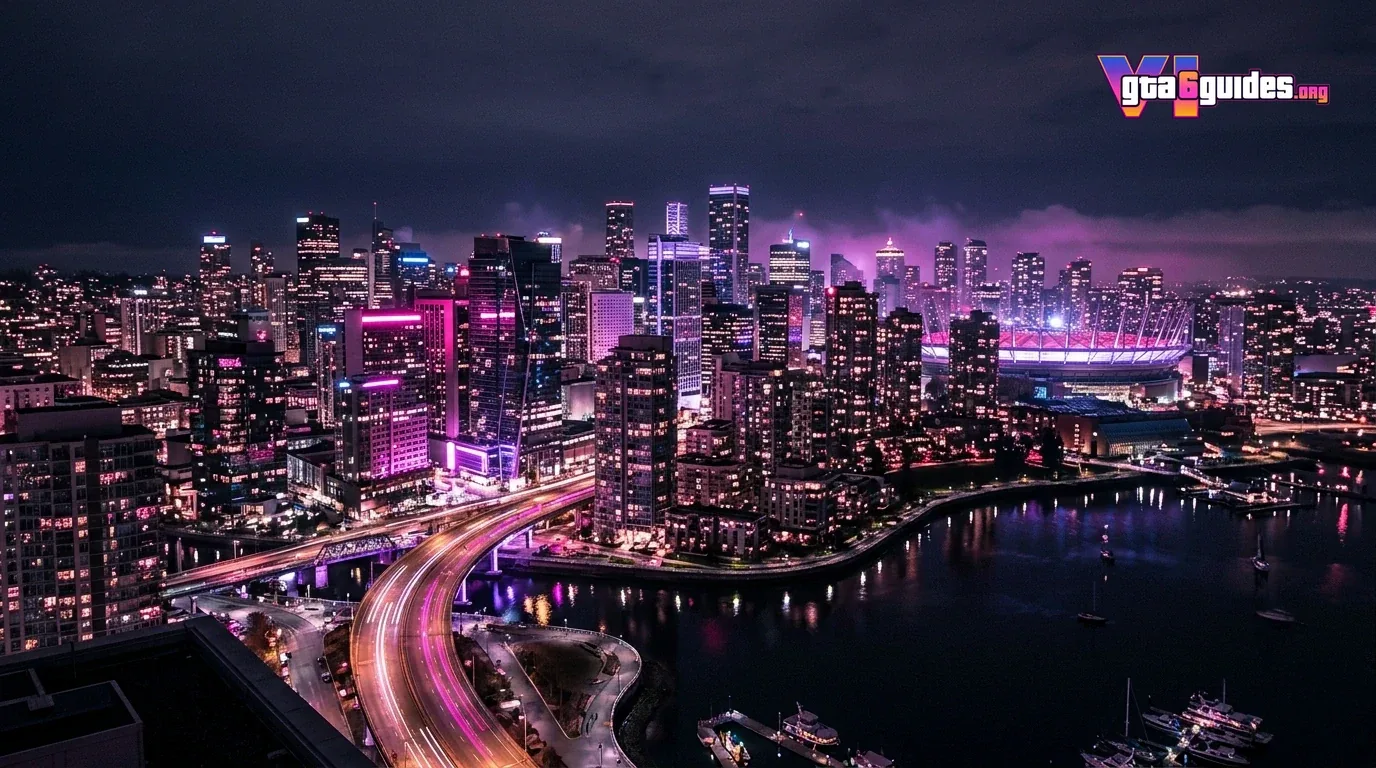
The real opportunity lies in recognizing that GTA’s formula—crime, ambition, moral compromise—works anywhere humans gather. Settings beyond sprawling metropolitan areas could offer fresh perspectives on the same themes. Vice City worked, but other locations might have offered something equally compelling or even more innovative.
Futuristic Sci-Fi Worlds and Space-Based Crime
Imagine a GTA experience set on a colonized moon or space station, where interstellar criminals navigate a frontier society with all the corruption and inequality of earthbound cities. This concept borrows from science fiction like The Expanse, translating Rockstar’s signature social critique into a futuristic framework. The studio’s ability to satirize contemporary culture could transfer seamlessly to speculative futures, perhaps even more effectively since sci-fi settings aren’t bound by real-world constraints.
The gameplay possibilities expand dramatically in such a setting. Standard weapons and vehicles give way to laser cannons, gravity-defiant speeders, and spacecraft designed for off-planet heists. A helicopter chase through Miami’s skyline becomes a thrilling pursuit through asteroid fields or orbital platforms. Rockstar has never fully explored this direction, leaving it as untapped potential for the franchise.
For those interested in exploring how GTA’s mechanics might evolve, GTA6Guides.org offers analysis on the franchise’s directional possibilities and design philosophy. The studio’s willingness to experiment with tone and setting could make a sci-fi GTA genuinely groundbreaking rather than merely entertaining.
Small-Town America as a Crime Backdrop
Rural and small-town settings contain all the elements that make urban crime narratives compelling. Social pressures intensify in tight-knit communities where everyone knows everyone else. The gap between wealthy and working-class residents becomes starkly visible on Main Street, where boarded-up storefronts and declining industries tell stories of economic desperation.
Games like Far Cry 5 demonstrated that small-town America offers rich soil for narrative tension. The dream of escape feels more urgent when opportunities are scarce and the town itself feels like a prison. Corruption in small towns often runs deeper than in cities because power structures remain unchallenged. A local politician, business owner, or crime boss wields influence that feels inescapable.
This setting would force Rockstar to reconsider its typical urban playground formula. Heists might involve stealing from family-owned businesses or manipulating town politics rather than robbing downtown banks. The slower pace and closer relationships between characters could create intimacy that sprawling city narratives sometimes lack. The contrast between picturesque facades and underlying rot provides natural material for Rockstar’s satirical approach.
A London-Centered Urban Experience
Rockstar’s UK studios have spent years dissecting American culture through their games. A London-based GTA would flip that dynamic, allowing the developers to examine their own society with the same critical eye they’ve applied to American settings. Watch Dogs: Legion touched on this territory but never fully committed to the crime-focused narrative that defines GTA.
London offers architectural variety, distinct neighborhoods with genuine cultural differences, and a different flavor of organized crime. The city’s political landscape, class divisions, and relationship with technology create fresh angles for social commentary. British humor and sensibilities could reshape how the game approaches its satirical elements.
The franchise has occasionally ventured outside America, but never with the same depth and focus that Vice City or Liberty City received. A full London experience would represent genuine franchise expansion rather than retreading familiar ground.
Crime Thrillers and Informant Narratives
What happens after a criminal succeeds? Most GTA narratives follow the rise, but rarely explore the fall and redemption arc. An informant-based storyline, similar to L.A. Noire’s crime thriller approach, would flip the traditional protagonist role. The player character has already built an empire, achieved success, then faces arrest. Survival means cooperating with law enforcement, using criminal connections to help detectives while navigating the moral minefield of betrayal.
This narrative structure would introduce genuine moral complexity that standard GTA stories sometimes lack. Every mission becomes a negotiation between self-preservation and loyalty. The player must balance helping authorities while protecting former associates, creating tension that extends beyond simple combat and theft.
Speculation about GTA 6’s protagonists, Lucia and Jason, suggests this direction might have appealed to Rockstar’s writers. The refreshing change from typical GTA heroes—criminals who succeed through violence and cunning—could have made the narrative feel genuinely different. An informant story would require different mission design, different character relationships, and different thematic payoffs.
Fantasy Realms and Medieval Crime
Baldur’s Gate 3 proved that fantasy settings appeal to contemporary audiences seeking immersive worlds. Transposing GTA’s crime-focused gameplay into a fantasy realm like D&D’s Forgotten Realms would create something unprecedented. Rogues, thieves, and criminal organizations already populate fantasy worlds, complete with corruption, inequality, and moral ambiguity.
The main obstacle is mechanical. GTA’s identity revolves around vehicles, particularly cars. A fantasy GTA would require rethinking that core element. Perhaps magical transportation, flying mounts, or teleportation networks could replace traditional vehicles. Heists might involve stealing magical artifacts rather than cash. Territories could be neighborhoods in a sprawling fantasy city rather than urban districts.
The satirical potential remains intact. Fantasy societies contain the same class divisions, political corruption, and human desperation that make modern settings compelling. A fantasy GTA could comment on power structures, wealth inequality, and social injustice through a completely different aesthetic lens.
Historical Settings and Ancient Rome
Historical settings offer narrative possibilities that modern games rarely explore. Ancient Rome during the height of political corruption and social volatility provides a backdrop where GTA’s themes resonate powerfully. Imagine protagonists who are outsiders—Britons, Germanic peoples, or Carthaginians—thrust into Roman society and forced to navigate a world hostile to their very existence.
The parallel to contemporary crime narratives becomes obvious. Survival means adopting the values and methods of the oppressor, using Roman systems of power against the people who brought the protagonists low. Centuries separate ancient Rome from modern Vice City, yet the fundamental human struggles remain identical. Ambition, betrayal, moral compromise, and the pursuit of power transcend historical periods.
Gameplay would necessarily transform. Weapons become swords and spears rather than guns. Territory control involves political maneuvering as much as direct conflict. The social commentary becomes more abstract, filtered through historical distance, yet potentially more powerful because of that distance. Audiences might accept critiques of power and corruption more readily when presented through historical fiction.
The 1980s as a Cultural Pressure Cooker
The 1980s represented a chaotic era—culturally, socially, economically, and politically volatile. Nearly every major problem in contemporary society traces its origins or significant evolution to that decade. The decade witnessed massive global change, yet gaming has barely explored it beyond Yakuza 0, which captured the Japanese experience brilliantly.
An 1980s GTA would examine American culture during its most turbulent transformation. The rise of corporate greed, the beginning of the war on drugs, the emergence of new technologies, and radical shifts in social values all compressed into ten years. The setting provides natural material for Rockstar’s satirical approach, offering distance from contemporary issues while remaining immediately recognizable.
The visual and audio possibilities expand dramatically. Neon aesthetics, synthesizer-driven soundtracks, period-appropriate vehicles, and fashion create a distinctive atmosphere. The era’s optimism mixed with underlying anxiety provides emotional texture that modern settings sometimes lack. Crime in the 1980s felt different—less organized, more chaotic, driven by different motivations than contemporary criminal enterprises.
Political Intrigue in a Capital City
Video games have rarely attempted political thrillers despite the genre’s popularity in film and literature. A GTA set in a capital city—the franchise’s equivalent of Washington D.C.—would explore how crime intersects with political power. A careless politician visits a club owned by the player character and reveals sensitive information. That single slip drags the protagonist into a conspiracy far more dangerous than street-level crime.
The narrative could examine how criminal enterprises influence political systems, how politicians depend on criminal connections, and how power flows between seemingly separate worlds. Missions might involve blackmail, information brokering, and manipulation rather than traditional heists. The player character becomes a kingmaker, pulling strings behind political scenes while avoiding direct confrontation.
This setting would require different mission design and different character relationships. Politicians, journalists, law enforcement, and criminal associates all become important players. The player must navigate complex social hierarchies where a wrong move creates enemies in positions of genuine power. The stakes feel higher because they involve national security and political stability rather than just personal wealth.
Safe, Affluent Communities as Unlikely Playgrounds
Carmel, Indiana, consistently ranks among America’s safest and most desirable places to live. Such communities represent the opposite of typical GTA settings—clean, organized, prosperous, and seemingly crime-free. Yet crime exists everywhere, including affluent suburbs. The contrast between surface appearance and underlying corruption could provide rich material for Rockstar’s satirical approach.
A wealthy suburban setting would force different gameplay approaches. Heists might target country clubs, corporate headquarters, or elite residences rather than urban banks. The criminal underworld operates differently when everyone knows each other and social status matters intensely. Betrayal carries different weight in communities where reputation determines access to power and resources.
The social commentary potential remains high. Wealth doesn’t eliminate crime—it merely changes its nature and visibility. Corruption in affluent communities often remains hidden because those involved have resources to cover their tracks. A GTA set in such a location could examine how wealth and privilege enable crime while simultaneously making it less visible to outsiders.
Exploring how different settings reshape GTA’s core mechanics and narrative structure remains valuable, even though Rockstar chose Vice City. GTA6Guides.org continues analyzing the franchise’s design choices and how alternative directions might have evolved the series. Each potential setting would have demanded different design philosophies while maintaining the social commentary that defines the franchise.
Frequently Asked Questions
Could GTA work in a non-urban setting?
Absolutely. Crime, ambition, and moral compromise exist in rural areas, small towns, and suburbs just as they do in cities. The specific challenges and power structures differ, but the fundamental human conflicts remain identical. Games like Far Cry 5 proved that rural settings support compelling crime narratives.
Why hasn’t GTA explored sci-fi settings?
The franchise has consistently grounded itself in recognizable contemporary reality, allowing for direct social commentary. Sci-fi settings introduce speculative elements that complicate that approach. However, Rockstar’s satirical strengths could translate effectively to futuristic worlds, making this a missed opportunity rather than an impossible direction.
Would a historical GTA work mechanically?
It would require significant redesign. Vehicles define modern GTA gameplay, so historical settings would need alternative transportation systems. Weapons, mission design, and character progression would all transform. The core appeal—crime, ambition, and social commentary—would remain intact despite mechanical changes.
What makes the 1980s appealing for a GTA game?
The decade was culturally, socially, and economically volatile, providing rich material for social commentary. It offers visual and audio distinctiveness through aesthetics and music. The era remains recent enough to feel familiar while distant enough to provide perspective on contemporary issues.
Could GTA explore political themes more deeply?
Video games rarely attempt political thrillers, leaving this territory largely unexplored. A capital city setting would allow Rockstar to examine how crime intersects with political power, creating narratives more complex than typical heist stories. The genre’s popularity in other media suggests substantial audience interest exists.
Why does setting matter for GTA games?
Setting determines available missions, character relationships, social commentary angles, and gameplay mechanics. Different locations reshape how players approach objectives and interact with the world. Setting also influences the game’s satirical targets and thematic focus, making it fundamental to the overall experience.
More guides
 games with physical discs in 2026
 7 Games With Physical Discs in 2026, Unlike GTA 6
By GTA6Guides Grand Theft Auto VI last blockbuster
 Why Grand Theft Auto VI Might Be Gaming's Last Blockbuster
By GTA6Guides GTA 6 $100 edition outselling $80